



Šumava and Český les along the roads less travelled. These are the trip tips worth following
AUTHOR ALOIS ŽIŽKA
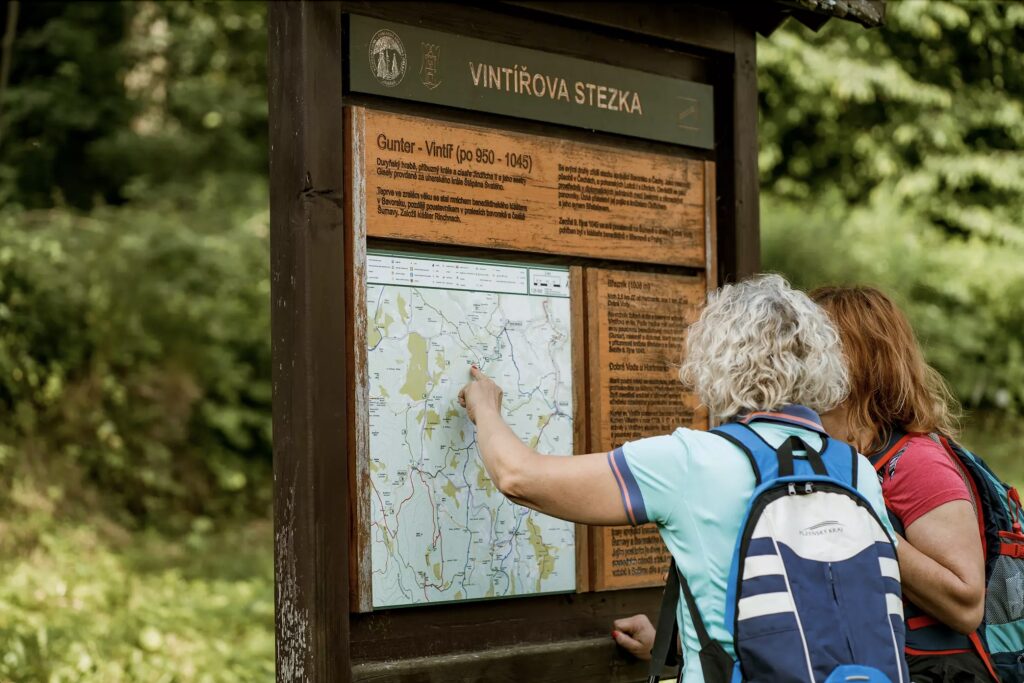
The weather may still feel more like autumn, but if you love nature and walking there is no reason to despair. The Kudy z nudy portal has several tips for lesser-known hiking routes in Šumava and Český les (the Bohemian Forest): walk the Vintíř Trail, get to know three branches of the Golden Trail, or set out for the abandoned village of Lučina. These routes lead into undiscovered corners of Šumava, the Pošumaví foothills and the Český les Protected Landscape Area.
The Vintíř Trail from Annín to Březník
Do you know the Vintíř Trail? It is a Czech-Bavarian long-distance route linking places connected with the medieval hermit Saint Vintíř, said to have been the first inhabitant of Šumava. In all, the trail is divided into 9 one-day stages covering a total of 162 km. Our recommendation is the leg from Prášily to Vintíř's Rock on the Březník hill near Hartmanice and on to Annín. This beautiful 20 km route runs through romantic countryside where forests alternate with meadows. The starting point is easy to reach by bus, and so is the return from the “Dlouhá Ves, Annín, rozc.0.5” stop, served by buses to Sušice, Kašperské Hory, Kvilda and Modrava, and even to Prague.
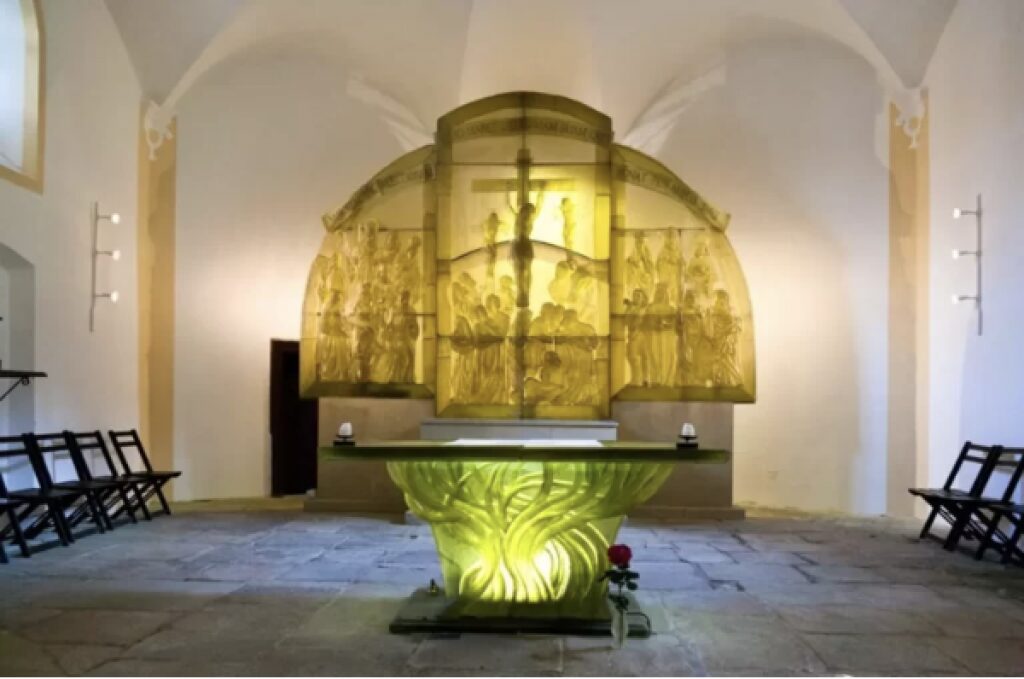
From Prášily the trail passes the sites of vanished settlements and follows the meandering Křemelná, where the remains of a Celtic settlement were recently discovered. At the former Šerlův dvůr farmstead, older visitors may recall the film Král Šumavy (The King of Šumava) – some of its scenes were shot right here. Below Březník (1006 m) you can stop for refreshment at Chata Rovina. The route then continues up Březník hill, through the very places where St Vintíř walked and lived as a hermit. From there it descends via Dobrá Voda, where a healing spring rises. The local gem is the church dedicated to St Vintíř, with its glass altar. In Hartmanice, do not miss the Mountain Synagogue. On the walk from Hartmanice to Annín you pass a row of 14 memorial trees in the Palvinov avenue, and the route offers many lovely views far across the region, as far as the landmark church at Mouřenec. From there you descend to Annín, an important Šumava glassmaking settlement lying in a bend of the Otava. A working glassworks dating from 1796 still stands here, its buildings now listed as a cultural monument, and you can also look inside the Glass Museum. The bus stop is about 350 m beyond Hotel Annín, on the other side of the Otava (the yellow waymarking will take you there).
The Golden Trail across Šumava
Zlatá stezka (Goldsteig, the Golden Trail) is the collective name for a system of medieval north-south trade routes that cut through the deep primeval forests of Šumava and linked Bohemia with the Danube region. One of the most beautiful branches is the Kašperské Hory one, which connects Kašperské Hory with Horská Kvilda and Kvilda and crosses the border at Bučina.
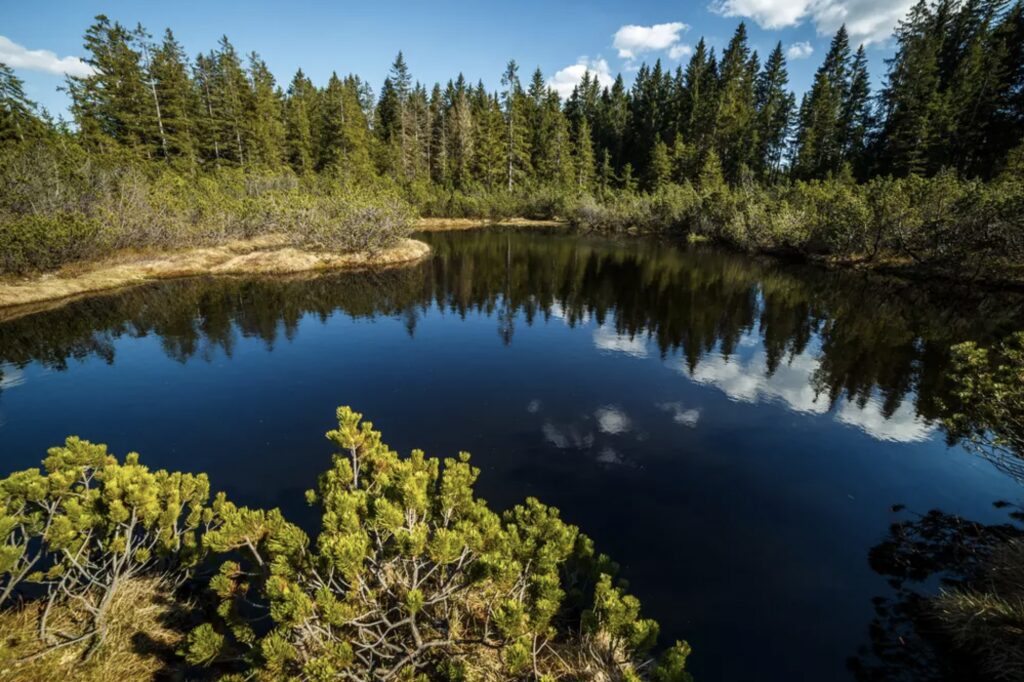
It measures 27.5 km in total and at Kvilda it crosses from the Plzeň Region into South Bohemia. An older trail used to run here as well, leading to Modrava, Březník and through the Luzenské valley via Modrý sloup on into Bavaria, but today that link is closed for nature conservation reasons. We have therefore chosen the “side” route via Bučina. It was built in 1356 on the orders of Charles IV as a high-quality “motorway” from Bohemia to Passau and Salzburg. It was 2.5 m wide, paved, and could carry carters and even merchants' heavy freight wagons! Following in its footsteps, you set out from Kašperské Hory across Malé Kozí Hřbety to the former settlement of Flusárna, then on to the former village of Zhůří and through forests and wetlands to Horská Kvilda. Past the Jezerní slať peat bog the route continues to Kvilda and then along the Teplá Vltava, through the Vltava forest, to the source of the Vltava and on to Bučina.
The forgotten village of Lučina in Český les
If you prefer expeditions into the unknown, where you meet only a handful of people all day, plan a trip in Český les to the abandoned village of Lučina (Grafenried), which lies right next to the German border. Like many similar places in this region, it disappeared in the 1950s and 1960s as a result of the creation of the border zone.
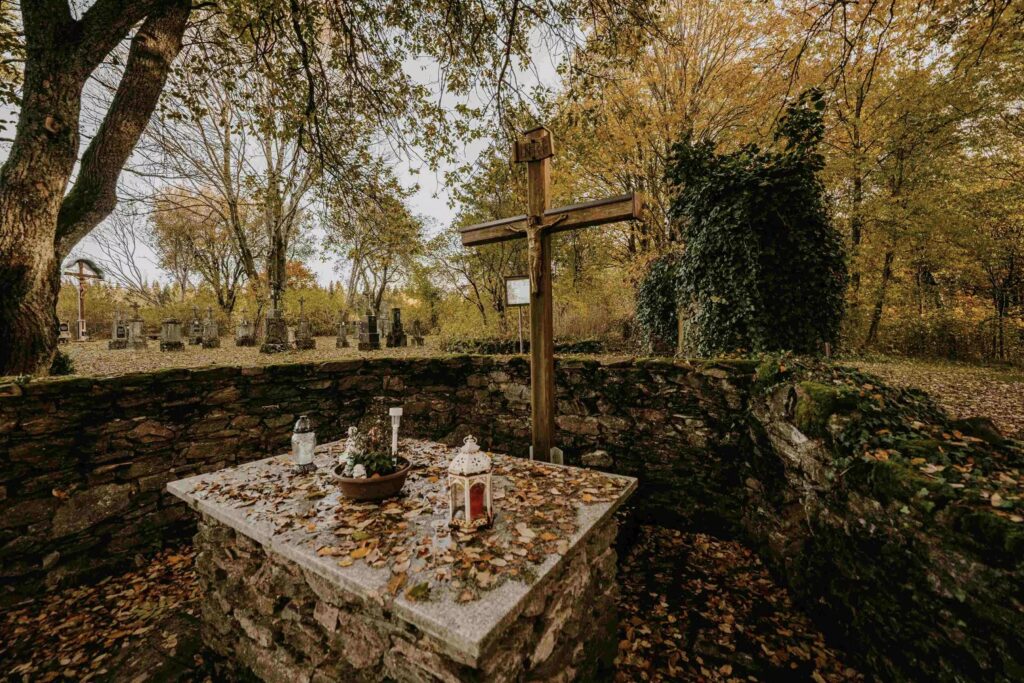
Former natives and their relatives have not forgotten their homes, however, and so a remarkable open-air museum is now taking shape in what was once Lučina. Thanks to hard-working volunteers from both sides of the border, the ruined walls are gradually being cleared of soil, and old staircases, paving and gravestones are coming to light… New paths are replacing the vanished ones, so the remains of the brewery, the parsonage, the pub and the glassworks can be seen again, and the original cemetery is open to visitors too. The real treasure is the Church of St George, where the revival of Lučina began years ago. Mass is celebrated once a year in the reconsecrated church, and from the niche above the former altar the Beautiful Mary, the Madonna of Grafenried, looks down once more on “her” Lučina. It is a copy of the painting rescued from the abandoned church, which is now kept in the museum in Waldmünchen, Germany.
For Germans the site of the former village is a frequent destination; from the pedestrian border crossing at Untergrafenried it is roughly a kilometre to the old village green. Czechs are only now discovering Lučina, as the journey from our side is a little more complicated. Apart from nearby Nemanice, the municipality Lučina belongs to, there are no other settlements here at all. Nor was the Czech side ever densely populated in the past. Grafenried itself was originally a German village, first mentioned in writing as early as 1282. From 1708 Lučina belonged to the Bohemian Crown and the village was divided: the northern part was joined to Bohemia under the name Obergrafenried, while the southern part stayed with Bavaria as Untergrafenried, which remains a typical Bavarian hamlet to this day. The Grafenried lime trees stand on Lučina's village green. Countess Anna Katharina Müllerová had them planted in 1765 as a group of six. Three mighty limes survive today, two of them protected as memorial trees. They reach heights of 22 and 30 metres, with trunk circumferences of 2.8 and 4.2 metres.