


STORIES AND HISTORY
Český les is not only a landscape of deep forests and quiet paths. It is a place full of stories that time has not buried, but has gently pressed into the moss, the old stone walls and the rustling of the trees. Walk with us through the history of a region where craft, courage and human destinies have been interwoven for centuries. Discover a land of forgotten glassworks, of vanished silent villages and of wild nature that has taken its peace back. Every place in Český les has something to tell – all you need to do is stop and listen.
THE HISTORY OF ŽELEZNÁ, THE STORY OF A SETTLEMENT ON THE BORDER OF TWO WORLDS
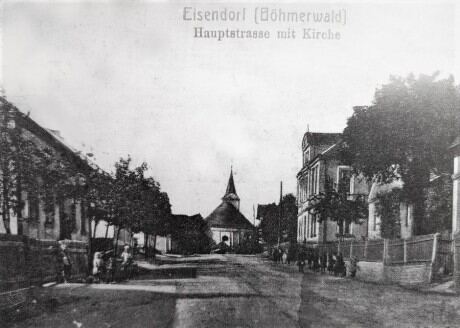
The story of a settlement deep in the forests
The earliest mention of the village of Železná (Eisendorf) dates from 1591, when it belonged to the extensive estate of Přimda castle. In 1601 the estate was sold to Jan Tomáš Valdfogel of Lehemühle, who had a chateau built here and turned Železná into an independent manor. Until 1696 the estate was owned by the Lammingers of Albenreuth and after them by the Cukrs of Tamfeld. In 1796 it passed to the Kocs of Dobrš, who lived on the estate until 1945.
During the 30 Years' War (1618–1648) the village is recorded as deserted. Imperial troops settled on the site and built substantial fortifications here, still visible in places today. These were named after the famous commander Tilly. At the turn of the 17th and 18th centuries the village began to prosper again, thanks to the growth of trade and agriculture. Glassworks were founded here and iron ore was mined, which gave the village its name, even though the mining was never of any great importance. In 1908 the village was struck by a devastating fire that consumed some sixty homesteads in the space of two hours. By that time Železná had already been raised to the status of a small town with roughly a thousand inhabitants.
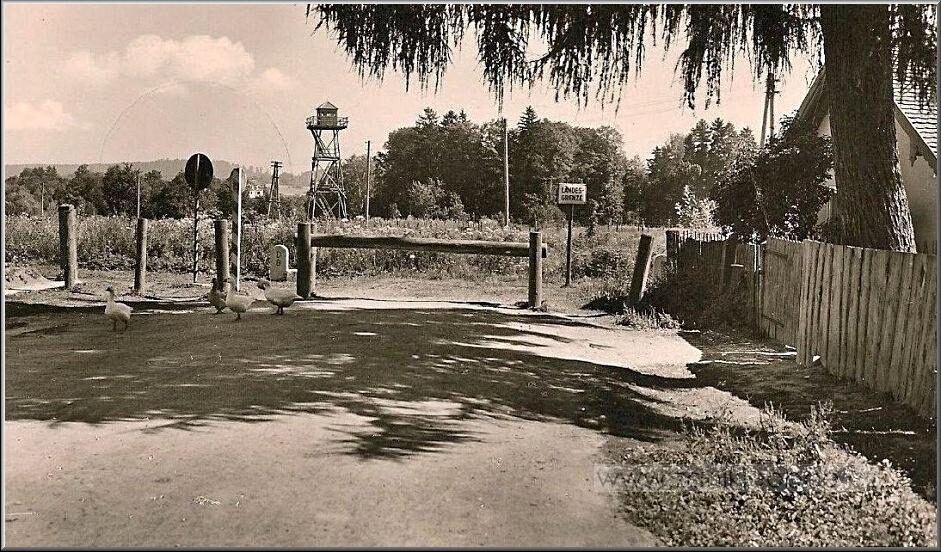
The village was utterly devastated in the post-war years, when the German-speaking population was expelled. Around 1950 the sources record only 250 inhabitants, and their number continued to fall. Approximately 90 % of the little town's buildings were destroyed, including the church of St Barbara, the chateau with its park and a further thirty-eight farmsteads. Houses here were sold at a flat price of 250 Kčs, and to locals at a discount for 50 Kčs. The heart of the village vanished without leaving any significant trace.
The village of Železná slowly begins to come back to life after 1989, when new cottage owners arrive and cross-border trade starts to develop. A more marked growth of tourism in Železná comes only with the creation of Resort Český les in 2023.
Železná acquired its Czech name only in 1958; until then it was known as Eisendorf, a name that in both language versions refers to the presence of iron ore. In Železná stood the church of St Barbara and the manor house of the noble family of Koc of Dobrš, whose members left together with the German population after 1945. Both monuments, along with dozens of houses, were demolished during the period when Železná lay within the border zone. Attempts at mining and the digging of ore, however, went on here long before a village with a manorial house was founded. Pre-war German authors report that the theft of fish from the Pfrentscheiher pond (Vranečské jezero), which was established as early as 1362 and reached partly into Czech territory, was once the subject of a dispute between the neighbours from Bavaria and Czech miners. The widow of Mikuláš of Švamberk, Anna, née Kfelíř of Zakšov ( 1531), is said to have moved the mining settlement for that reason to the slope of the Steinock hill, where suitable conditions for mining iron ore were also to be found. In 1540 the isolated farmstead of Bergmannshäusl is mentioned, which apparently became the nucleus of the later Eisendorf, our present-day Železná. According to a surviving armorial plaque, a manor house was built in 1609 by Jan Šebastián Perglár. After the Battle of White Mountain (1620), however, it was confiscated and sold to Wolf Vilém, Freiherr Lamingen of Albenreuth.
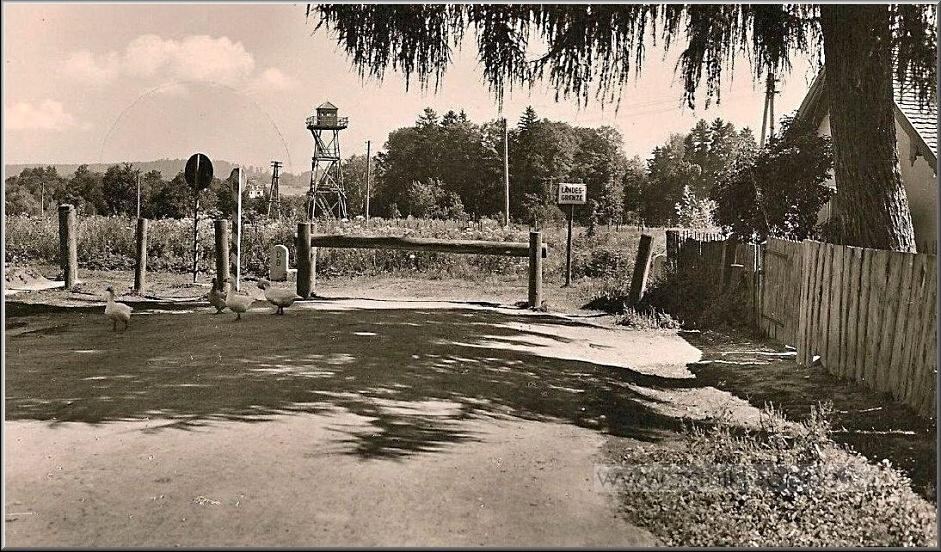
On the state border, in the immediate vicinity of present-day Železná, we also come across an isolated homestead called Tilly Schanz. Next to it lie the remains of the ramparts of an old fortification dating from the beginning of the so-called Bohemian-Palatinate War (1618-1623). On a border map of 1674 this fortified rampart lies on Palatinate territory and is directed against the access road from Bohemia. The fortification is marked as Alte Schanz and was probably built by the soldiers of Peter Ernst II of Mansfeld. The name Tillyschanz is evidently of more recent date and recalls the battle near nearby Rozvadov, where Johann Tilly had extensive field fortifications built on the Bohemian side.
The new lord, Wolf Vilém Lamingen, went on enlarging his estate, which after his death in 1635 was administered by the guardians of his three sons. The most important of them was Wolf Maxmilián, infamous under the name Lomikar, whom we know as the oppressor of the Chods from the Domažlice region.
At that time Železná consisted of 13 farmsteads and 25 cottagers' houses and formed part of the Svatý Kříž estate. In 1686 the estate passed to Anna Terezie, née Cukrová (Zuckerová), who subsequently married Filip Emerich Metternich z Winneburgu. Under the Cukr family, older glassworks in the border forest began to be revived and new ones founded, for example Karlova Huť (Karlbach) and Valdorf (Walddorf). The works were mostly leased to glassmaking masters, such as the Mossburger family from Mossburg. In 1781 the Svatý Kříž estate then passed to Countess Františka Romana, married to Jan Josef Koc, free lord of Dobrš, and it remained in the family's hands until 1945.
By that time Železná already numbered 63 farmers with their families, a manor house, a stocking pond and a farmyard with its land. There was a blacksmith, a tailor and a miller in the village, and glassworks were still operating in the surrounding forests. The parish church of St Barbara catered for the spiritual needs of 665 believers. Jan Josef was a freemason and also had artistic talent. In the period when the Kocs took over the Svatý Kříž estate, there was likewise a tremendous cultural flowering, supported by the family's later successors as well. From the time when the Koc family of Dobrš held Železná we already have far more information about the local manor house, which stood in the farmyard by the large pond. Železná, with the farmyard complex that also contains the manor house building, is drawn on the map of the first military survey of 1764-1768. In the middle of the 19th century the manor house still served as an occasional residence of the lords, made up of the following rooms – the baron's room, a living room, a guest room, a ladies' room, a sitting room, a dining room, a hall and an attic. The furniture and fittings of the manor house were plain. A brief description of the manor house has also survived from the same period:
"The building with an upper floor stands in the western part of the farmyard, its main façade turned to the east. The façades are smoothly rendered, the roof is covered with shingles; on the ground floor the building has 3 vaulted rooms, a vaulted kitchen and a chamber. On the south side of the building there is a stable for horses and a privy annexe. The upper floor contains 7 rooms connected by a corridor, the ceilings are plastered on reed lathing, and wooden stairs lead up to it. Its value was assessed at 3 078 gulden." On 15 July 1898 disaster struck Železná: a fire, probably started by the hand of an arsonist, engulfed a considerable part of the village.
Flames driven by a strong wind destroyed almost half of the houses along with their farm buildings. The church, the parsonage and the post office did not escape the fire either. The manorial farm, protected by a pond, was spared. The fire was reportedly started by arsonists at a time when most of the inhabitants were out in the fields. Within two hours a total of 58 house numbers, including farm buildings, were reduced to ashes. The fire spared 78 houses out of a total of 136 homesteads. 115 families, that is 600 inhabitants, lost the roof over their heads. In 1905 Železná then became, according to regional literature, a small town. In 1934 the Koc family leased the manorial farm and its land to the local farming association for a period of ten years.
The furnishings of the manor house were carried away and the lords of the manor never returned to it again. Family photographs suggest that the Kocs preferred to stay at the hunting lodge near Valdorf, which they had built in 1868. Forestry and hunting came first for the last of the Kocs living in Bohemia. Jindřich Koc died shortly after his forced departure to Germany in 1956, and the manor houses the family held – Újezd Svatého Kříže, Eisendorf and Valdorf) gradually fell into ruin. Shortly after 1945 Eisendorf found itself within the border zone. In the little town, where 2870 inhabitants lived in 1930, statistics from 1950 record a total of 250 newly settled residents, whose number fell to 101 by 1961. The larger part of the built-up area closer to the border was demolished by soldiers immediately after the border and prohibited zones were declared. At the beginning of 1952 the decision was even taken to evacuate the locality, raze it and gradually plant its site with forest. The border guard also destroyed the road that had linked Bohemia with the Upper Palatinate for centuries.
That was the year in which the little chateau with its manor farm appeared on an aerial photograph of the village for the last time. Eisendorf – Železná, a former small town lying directly on the Czech–Bavarian border, changed beyond recognition after 1948.
Two thirds of the buildings were demolished, among them the church of St Barbara, which the following lines are devoted to.
The Church of St Barbara as the spiritual heart of Železná
Vague written records of the church, which from its founding was probably dedicated to St Barbara, the patron saint of miners, appear as early as the beginning of the 17th century. The evidence comes from the church book that begins in 1631 and from the Eisendorf chronicle written by Petr Siegler. According to them, house No. 69, which adjoined the cemetery wall on the west, once served as the dwelling of a Protestant minister. This original, reportedly Protestant church therefore stood to the west of the Church of St Barbara that we know from historical photographs. The Catholic church, blown up in 1965, was founded, or rather restored, by Wolf Vilém Lamingen, who acquired the estate in 1630. In 1718 Václav Josef Cukr of Tamfeld had a prismatic tower added to the church. In 1844 the nave of the older, demolished church was replaced by a new one, joined to the tower. The massive Baroque building, formed by a vaulted nave with a prismatic tower and a sacristy, reached an overall length of 40 m, with a nave 15 m wide. In 1881 Father Jan Nepomuk Hügel took up the parish and set about repairing both the rectory and the church, which were in a wretched state. He had the outer façades restored and the interior whitewashed. During this work the priest had various benches and seats carried out of the church, ones the individual influential families had brought in themselves. The church had come to resemble a market hall rather than a house of God. This, however, earned him the anger and hatred of the influential local families, who had long held those places in the church. The episcopal consistory in České Budějovice and the secular authorities, to whom the inhabitants' complaints were sent, came down unequivocally on the priest's side, but did nothing to soften the families' hatred. Because of this the people of Železná even became the butt of jokes. In neighbouring Pleš or in Nová Ves it was told of them with derision that "the parishioners in Eisendorf can let the cobwebs in church hang right into their mouths, as long as they have their own seats there". Father Hügel even left Železná at his own request for the parish of Hora Svatého Václava, but in 1886 he came back to finish the restoration of the church. In 1898 the church largely burned down in the great fire of the little town, but it was rebuilt within a short time. Father Hügel became an eyewitness to the catastrophe and a participant in it. On 15 July 1898 at half past one in the afternoon a fire broke out in the barn of Georg Hofmann, house No. 71, and spread rapidly in the strong north-westerly wind. "Because the parish church was at that time still roofed with shingles and was therefore in great danger, my first thought had to be to carry the Blessed Sacrament and the other liturgical objects to safety, namely into the cellar that then stood in the parish garden. Meanwhile the whole rectory was already ablaze. Of all my belongings and the books and papers which, because of the damp in my rooms, I kept in the attic, not the smallest thing was saved. Since the shingle roof of the cellar in the garden had caught fire as well, I first had to move the Blessed Sacrament and the objects I had hurriedly carried out of the church from the cellar into the garden, and then, once the flames were reaching even there, out onto the parish field behind the garden, and to guard the Blessed Sacrament and the other objects there against human hyenas. In the meantime the church tower had begun to burn from the inside too. The alarm bells fell silent and within moments the entire church roof was in flames. But now the workers from the Tillyschanz sawmill hurried up and, at the command of Mr Tharandt, the manager of the mill, rescued from the burning church and the burning rectory whatever could still be saved. Because my chief concern was to bring to safety the parish registers, one of which began in 1654, the parish archive and the other parish papers and books, only the barest necessities of my furniture, clothes, beds, linen and so on were saved and carried out to the parish field behind the parish garden. By then the church was completely in flames. The church tower collapsed, three melted bells crashed down, the choir loft with the organ was burning from the tower end, and through the sacristy the altar caught fire as well. Fortunately at that moment my dear neighbour, Alexius Sperl, the parish priest from Esrlarn, appeared with the Eslarn firemen and several Bavarian border guards. They pushed into the burning, smoke-filled church and, with a hand pump, put out the burning choir loft and the altar with holy water."
Fortunately the burning roof truss of the church did not break through the vault of the nave. Work on restoring the church and the bell tower was begun that same year, and the flammable shingles on the new roof of the nave were replaced with slate. The ruins of the burnt-out parish building were pulled down. In 1899 the construction of a new parish house began, and Father Hügel was able to move into it as early as 1900. In Father Emil Douša, who came to Železná in 1912 and administered the parish until 1937, Železná once again gained a hard-working and highly energetic man. The church was repaired and given new bells, its furnishings were restored, and the sanctuary was damp-proofed and fitted with electric light. In 1916 Father Douša commissioned the repair of the badly damaged high altar, and a reconstruction of the pulpit was ordered as well. During the First World War the whitewashing of the church was undertaken by the painter Friedl from Mariánské Lázně. The vaults of the presbytery were decorated with frescoes by the painter Theodor Schenchl.
The middle scene showed the Mother of God with her protective mantle spread wide. Sheltering beneath it on one side was the "teaching" Church, represented by the Holy Father, the bishop and the other members of the clergy (many people thought the canon resembled the parish priest Douša, which he himself denied). On the other side, the mantle sheltered the "listening" Church, represented by two soldiers and by women with two children, who were imploring the Mother of God to protect their fathers.
The sad era of the First World War, in whose shadow the frescoes came into being, was recalled by further frescoes as well, showing the patron saints of war – St Wenceslas, St Henry and St Sigismund. These, however, carried a deeper symbolism. St Wenceslas stood for the late benefactor of the church, Václav Koc, St Henry for the owner of the estate at the time, Jindřich Koc, and St Sigismund for the patronage commissioner Zikmund Bodenstein. Nor was that all. The Archangel Gabriel on the main fresco was meant to recall Baroness Gabriela, the wife of Jindřich Koc. The little angel heads on the frescoes bore the likenesses of his four children, others those of the children of the manorial officials, and the nieces of Father Douša were not missing either. Finally the church's patron saint Barbara was depicted too. The triumphal arch was completed, as good custom demanded, with the coat of arms of the church's patrons, the Koc family of Dobrš. Photographs from 1965 show that the figures of the saints depicted in the frescoes have eyes shot out, because they had served as shooting targets for the soldiers of the Border Guard. The bells with anti-war inscriptions, which the priest Emil Douša secured for the church in 1922 after the original bells had been seized for war purposes in 1916, were confiscated during the Second World War by the Nazis for the needs of the Greater German Reich. After Father Douša's departure in 1937, the circumstances of which remain unclear, the priest Karel Sipetzky took up his ministry here and served throughout the whole period of the war. From shortly after the war only a very few documents survive to tell us about the life of the parish, for example a report dated 19 October 1945:
"The parish office in Eisendorf hereby informs the municipal office in Eisendorf that the local cemetery is already overcrowded…" Dean Karel Sipetský requests that a plot of land, which has already been chosen, be allocated for a new cemetery.
When the Communists took power in Czechoslovakia after 1948, the depopulated village of Železná found itself inside the prohibited border zone. From 1947 the parishes of Eisedorf and Pleš were administered by the priest František Brož, who served here until both parishes were dissolved, which probably happened as early as 1951.
According to a record made by Jitka Pavlíková, director of the heritage office in Plzeň, the church was looted in 1952 and in 1956 handed over to the local state farm as a place to store hay. An eyewitness confirms that the church furnishings really were thrown onto a flatbed wagon and reportedly carted off somewhere to be burned as fuel. Checking the state of the church, or carrying out any repairs, was impossible, because the village lay inside the prohibited border zone.
From 1963 onwards the demolition of the church was planned under the pretext that it was in a dilapidated, life-threatening condition, and when the situation eased in 1965 and conservationists visited Železná, all they could still do was survey it and take a few photographs. The photograph taken on 17 March 1965 by Viktor Douba makes clear that, despite the church's desperate state, the masonry was in good condition and its demolition was carried out only perfunctorily. The heritage officers had to hurry, because holes for the explosive charges were already being drilled into the church walls. The soldiers blew up the abandoned church and pushed its rubble aside with a bulldozer together with the neighbouring cemetery. Between the years 1982-1984 the site where the church and its graveyard had stood was taken over by new buildings of a Border Guard company.
The history of the old school in Železná
The local teacher Josef Toupal described the destruction of the church in the school chronicle: “At the end of March the church was pulled down; first the roof truss was taken apart and the beams were allotted to the villages for the Akce Z public works. The rest of the beams, which were not needed, went to the school as firewood. The teacher carried them all to the school himself and then sawed them up. By his estimate there were 8 m3 of them. The blowing up of the church damaged the school building and the fence.
Representatives of the education department, Comrades Thomayer, Fišer and Ruš, came to see the school.” The chronicle of the Czech minority school dating from the time of its founding has not survived; throughout the occupation the building served as an administrative office Nazi organisations and the Czech school here was reopened after 6 long years of world war - on 17.9.1945. During the war all the equipment was moved from the Czech school to the German one, and towards the end of the war the building served as a refugee camp, when all the remaining equipment was looted. As they moved out of the school, the Nazis wrecked it inside and out. After the reopening a total of 56 children attended the school, and since these were above all the children of local Germans, the teaching concentrated primarily on Czech. The original number of pupils kept falling; the children repeatedly took part in work brigades reforesting the woods at Pleš. In 1950, for instance, they planted 1 500 trees in 7 days.
On 15 March 1952 the school was closed and, by decision of the military administration, everyone had to move out of the prohibited zone. In 1956 came another turn of events: Železná began to be resettled and it was agreed that the school would undergo a general overhaul in 1958, so that the children would not have to walk to Smolov 8 km away; the school was temporarily housed in house no. 48 – at that time only 6 children attended it. Teaching started again in the renovated building on 2 March 1959. The surroundings and the playground were built by voluntary effort, a vegetable garden was laid out afterwards, and a health club and a local Pioneer group were opened. Thanks to the teacher a puppet company and a pupils' library came into being, and a sledging race was held as well. A winter ice rink was built too – except that between them the pupils had only two pairs of skates. The local national committee in Smolov, under which the school fell, did not supply it with teaching aids, and so chalk, ink, washing supplies and everything else the teachers had to see to themselves out of their own means The teacher, together with his wife and relatives, even had to set about rebuilding the teacher's flat with their own hands. The school suffered from a high turnover of pupils. Forestry workers often came to the borderland and left again quickly, life here was hard, women found no work, and not even a tarmac road led to the village. In the village, which before the war had been larger than Bělá, only 6 families were living in 1973, exactly 29 inhabitants, and the situation was bleak. Most of the houses had been sold for holiday use. The last school day of the local school was 27.6.1975. A shop assistant then lived in the school flat and the children commuted to school in Bělá nad Radbuzou.
Drawn from the publications Železná – Eisendorf by Zdeněk Procházka (2025) and Vanished Village Schools of the Pilsen Region IV by Miroslav Michalec (Machart, 2024)
DESTINATION ČESKÝ LES
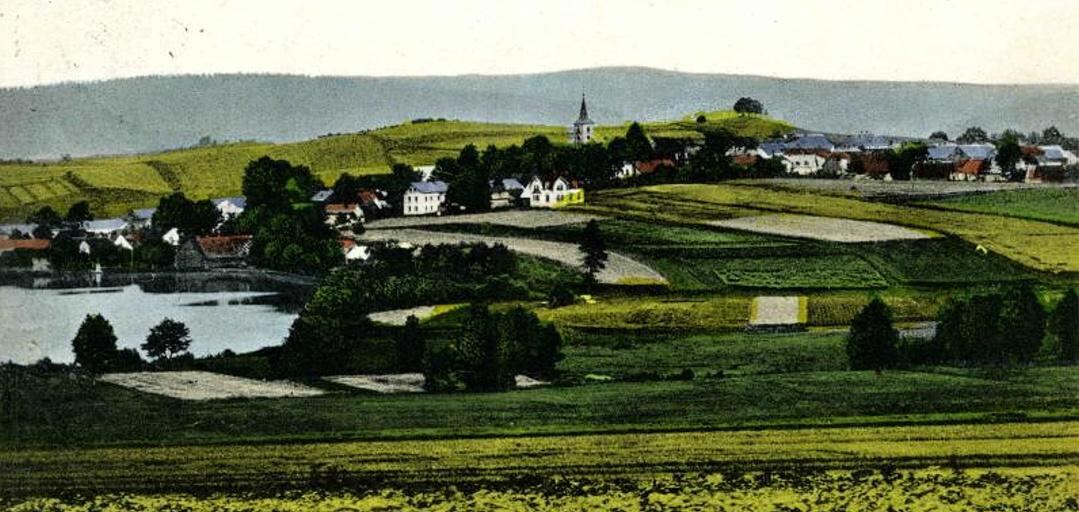
Český les is the natural continuation of Šumava. In a narrow belt 6–17 km wide it runs along the state border with Germany for a distance of roughly 80 km, from Folmava all the way to the southern part of the Chebská kotlina basin. This area of unspoilt nature covers a surface of 473 km². On the Czech side of the range there are two summits rising above 1000 m above sea level, the Čerchov lookout tower (1041 m above sea level) and the hill of Skalka (1008 m above sea level). The German side of the territory is a nature park, known here under the name Hornofalcký les (Oberpfälzer Wald).
Immediately after the border zone was abolished in 1989, when this long-hidden region became accessible to the general public, the first proposal to declare a protected landscape area here was drawn up in 1990. Conservationists were well aware of the need to safeguard an area whose natural character had remained so remarkably intact. Thanks to their unflagging persistence, to many negotiations, field visits and consultations, they finally reached their cherished goal. The proposals went through a series of revisions, and on 12 January 2005 the Český les Protected Landscape Area was declared by government decree, taking effect on 1 August 2005.
The Český les protected landscape area is graded into four zones of nature protection.
Zone I takes in the peat bogs and the fragments of beech woodland that have survived in places which are hard to reach.
Zone II covers both natural and altered ecosystems: river floodplains, pastures, wetlands and meadows.
Zone III holds the remaining forest stands, dominated by uniform, even-aged spruce monocultures.
Zone IV consists mainly of agricultural land, larger tracts of actively farmed fields.
Český les as a whole is divided into four sub-units: Čerchovský les, the Kateřinská kotlina, Přimdský les and Dyleňský les. These sub-units can be broken down further into smaller districts. Čerchovský les makes up roughly one third of the entire territory of Český les. It is covered for the most part with spruce forest and is divided into the Haltravská hornatina, the Nemanická vrchovina and the Ostrovská vrchovina. The Kateřinská kotlina, a further sub-unit with an area of 57 km² and drained by the Kateřinský potok, has a uniform relief and is therefore not subdivided any further. Přimdský les is a rugged upland with an area of 330 km². It falls into four districts: the Málkovská, Plešivecká and Havranská vrchovina and the Rozvadovská pahorkatina. Dyleňský les is the last of the sub-units, and its more detailed division depends on the geomorphological conditions.
Water is an inseparable part of the landscape of Český les. Ponds and marshes have shaped its distinctive character since time immemorial. One important wetland site is the Postřekovské rybníky ponds in the Domažlice area. In the region you can admire crystal-clear brooks such as the Kateřinský and the Nemanický, which belong to the Danube basin and thus drain towards the Black Sea. Other precious natural formations are the mountain streams and the floodplains along the watercourses, which represent rarely preserved wetland ecosystems. Two important West Bohemian rivers also rise in Český les – the Mže and the Radbuza.
THE HISTORY OF THE ČESKÝ LES REGION
Archaeological finds from the Český les region show that it was already settled in prehistoric times. Given how impenetrable and densely wooded the landscape is, however, the area remains largely unexplored by archaeologists. The beginnings of archaeological research in Český les are bound up with the popularity of collecting. Among specialists, the discovery of a bronze cart in one of the burial mounds near Milavče u Domažlic is regarded as legendary. The same site also yielded a bronze sword and a large amphora-shaped vessel made of sheet bronze, which thanks to the work of restorers can be seen today in the museum in Mainz.
Various small cauldrons and little amphorae have survived in the collections of the Chodsko Museum in Domažlice. The Museum of the Český les in Tachov displays artefacts from the late Stone Age, for instance a shaft-hole axe-hammer and an axe.
Settlement began to grow as early as the Middle Ages, but because of the inhospitable location it never took on a lasting character. The colonisation process, particularly in the Domažlice area, ran into difficulties not only because of the harsh climatic conditions, but also because of the friction between two ethnic groups – the Czech and the Bavarian side. Fortified guard posts sprang up along the trails on both sides, Czech and German, while the land border itself remained unsettled and shifting. Clashes of interest arose between the Czech princes and their neighbours from Bavaria and the Upper Palatinate. One major military encounter was the battle fought by Prince Břetislav I against the German Emperor Henry III at Brůdek in 1040, which the Czech armies won.
Alongside this, monastic colonisation was under way as well – the first west Bohemian Benedictine monastery was founded at Kladruby in 1115 and the Premonstratensian monastery at Teplá in 1193. The transformation of the village settlements, for which the new feudal owners were responsible, gathered pace, and small market towns began to take shape. Cosmas' chronicle already mentions one of them - Bělá nad Radbuzou, which used to be one of the centres of the Chods. A historically important mark was left on Český les by the Chods – the guardians of the land border. These settlers occupied the belt running from the Všerubský průsmyk pass all the way to the Tachov region. The first mention of the Chods comes from Dalimil's chronicle of the early 14th century. Historians consider them to be inhabitants of Serbian origin, which is borne out by the oldest Chod settlement near Srbice on their territory. The Chods had their own privileges, their own court and their own reeve. In the course of time, however, their liberties died away because of the building of fortified castles, the rise of towns and the colonisation by German settlers.
Under the reign of Přemysl II. Otakar a network of towns came into being, among them the royal towns of Domažlice and Tachov. A number of castles also arose at this time, for example Přimda, the bastion in Tachov, Nový and Starý Herštejn or Rýzmberk. The rivalry for the imperial crown between Charles IV and Louis IV of Bavaria heightened the military interest of the Luxembourgs in western Bohemia and in its defence against their neighbours. Charles IV did plan to create the so-called “New Bohemia” by joining Tachov, the surrounding villages and the dowry of his wife Anna Falcká (the Upper Palatinate), but he never managed to carry the plan through completely. Thanks to Charles IV's frequent journeys through this region from Prague to Nuremberg, the so-called “Nuremberg Trail” came into being, which played an important role in transport and trade.
Because of its position, Český les came under attack again and again. The fourth crusade, organised by the Imperial Diet and the Pope, was to advance from Nuremberg by way of Cheb and Tachov, but in the end the crusaders decided to take the town of Stříbro. The Hussite armies under Prokop Holý reacted swiftly, however, and drove the crusaders back from the gates of Stříbro. The crusaders took their defeat hard, and as part of the fifth crusade began besieging Tachov on 1 August 1431. They laid waste to the wider area, burned down the small town of Brod and another 200 villages, and even struck part of the Domažlice suburb. The Hussites repelled this expedition too, on 14 August. The Hussite wars brought great changes in the ownership of land. The archbishop's estates in Horšovský Týn and Velký Bor ceased to exist and the Kladruby monastery was curtailed as well. Although the Hussite wars helped to make the towns more Czech even in the border region, the nobility began inviting new German colonists in.
It was only in the 18th century, thanks to changes in ownership and the rise of the Habsburgs, that Český les experienced a great boom in crafts and in the economy. The forests were a rich source of timber, used not only as fuel but also in the glassworks and ironworks. We call this period the "glass expansion". Among the oldest glassworks are Stará Huť u Rybníka, Eisendorfská huť, Štráská, Horní and Karlova Huť. Charcoal burned in the kilns also served as a reducing agent in the smelting of iron and zinc ores.
GREAT FIGURES OF THE ČESKÝ LES
Rodina Berchem-Haimhausen
Originally a prominent burgher and patrician family from Cologne, they worked their way up into the leading nobility through their service at the Bavarian court. The Berchem-Haimhausens acquired the Chodová Planá estate in the 18th century by inheritance from the related House of Haimhausen – and it remained in their hands for more than two centuries, until the end of the Second World War.
For the whole region they were a key family. They transformed the existing chateau in Chodová Planá into an elegant residence surrounded by an extensive English park and did a great deal for the development of the local economy, above all for the tradition of the chateau brewery. As generous patrons they wrote themselves into history through their support for local schools, churches and social care. Their long era in Český les came to a close in 1945, yet the imprint of their work is still plain to see in the landscape and architecture of Chodová Planá today.
Rod Coudenhove
The Coudenhove family, a noble house of Brabant origin, left an indelible mark on western Bohemia. Its younger Czech branch, represented by Count Franz Karl Coudenhove, bought the estate and chateau in Poběžovice in 1864. So began a fascinating chapter of history that links the region with the distant Orient and with the idea of a modern Europe.
Franz's son Heinrich, a widely travelled diplomat and polyglot, brought his wife Mitsuko Aoyama, the first Japanese woman to live in Bohemia, to the family seat in Poběžovice. Their son, Count Richard Nikolaus Coudenhove-Kalergi, spent his childhood right here in Poběžovice. During the interwar years he became the founder of the Pan-European Union and one of the first visionaries of a united Europe. To this day the Poběžovice chateau thus remains a memento of a place where world history, culture and a far-reaching outlook came together.
Karel Josef Heidler z Heilbronnu
A descendant of a prominent burgher family, a brilliant physician and a visionary of balneology, he wrote himself indelibly into the history of western Bohemia. He served as the first official spa doctor in Mariánské Lázně, and it was he who gave the local healing treatment both a scientific order and a worldwide name.
His expertise and his humane manner drew the most celebrated figures of the Europe of that day to the region. Among his most eminent patients and close friends was Johann Wolfgang Goethe himself, whose health and spa stays Heidler attended to. For his outstanding services to the advancement of medicine and to the promotion of the region he was raised to the nobility with the predicate of Heilbronn.
Rod Metternichů
The distinguished noble house of Metternich entered the history of the region in 1623. Although the family is known above all through the work of the diplomat and privy councillor Franz Georg Metternich and of his son, the chancellor Klemens Wenzel, its influence also had a fundamental impact on Český les itself and on the surroundings of Železná.
The Metternichs were not only politicians but also able estate managers. They breathed life into the deep forests here, promoting the growth of glassmaking and forestry and the building of roads that linked the borderland with the world around it. Traces of their administration, of their forest districts and of their legacy of craftsmanship are still visible in the history of Železná and the surrounding country to this day.
Rod Windisch-Graetz
The distinguished noble house of Windisch-Graetz is closely bound up with the development of the entire Tachov region and the adjoining forests of Český les. Its key figure was Prince and Austrian Field Marshal Alfred I. Windisch-Graetz, who turned the château in Tachov into the main family seat and the centre of his extensive estates in western Bohemia.
In 1825 he enlarged the family holdings with the former Benedictine abbey at Kladruby near Stříbro, which he turned, among other things, into a family tomb. The Windisch-Graetzes left an indelible mark on the memory of the region not only through their extensive management of forests and farming, but also through the building of the unique neo-Romanesque riding hall at Světce near Tachov – the second largest in central Europe, which to this day takes the breath away of every visitor to Český les.
Rod Kolowratů
Since the 17th century the heart of Český les around Přimda has been inseparably linked with one of the oldest Czech noble families – the Kolowrats. Over the course of history, members of this distinguished house held the highest offices of state, sat in the Imperial Council and received the highest honours the monarch could bestow for their services.
Their most striking imprint on the landscape is the Baroque hunting lodge Diana, surrounded by a romantic English park and an extensive game preserve. The Kolowrats were not only high-ranking politicians but above all enlightened managers of their estates. They confirm their deep bond with the forests and traditions of this area in the present day as well – having returned as owners, they still care in exemplary fashion for the deep woods around Přimda, for the monuments and for the development of the whole region.
Jaroslav Vrchlický
The poet who listened to the murmur of these forests
The celebrated Czech poet, playwright and translator Jaroslav Vrchlický fell under the spell of the western borderland and of Český les during his summer travels. The deep, misty woods and quiet corners were for him an oasis of calm, to which he escaped from the bustle of city life.
The untamed nature here and the murmur of ancient trees became a direct inspiration for his lyric poetry. Vrchlický saw Český les as a living being with a soul and a memory of its own – and his legacy lives on with us. It is precisely the poetry and verse of Jaroslav Vrchlický that inspired the names of the individual rooms in our boutique apartments, so that every guest can take a piece of this romantic atmosphere and creative calm away with them.
Jan Sladký Kozina
A proud guardian of Chodsko's borders and traditions
The name of Jan Sladký Kozina is inseparably bound to the proud people of Chodsko, whose task for centuries was to guard the land border and the passes through the deep forests of Český les. The legendary leader of the Chod uprising became a symbol of the longing for justice and freedom, and of loyalty to one's native region.
Stories of the Chod principles, of the guard dogs and of the ceaseless struggle to preserve the old rights still resonate today throughout the whole landscape, from Hrádek by way of Újezd all the way to the border settlements around Bělá nad Radbuzou and Železná.
Jindřich Šimon Baar
The poet and chronicler of the soul of Český les
Born in nearby Klenčí pod Čerchovem, the priest and writer Jindřich Šimon Baar loved the untamed nature of Český les with all his heart. In his work, above all in the celebrated Chod Trilogy, he captured the singular spirit of this region, its strong-willed people, its folk customs and the raw beauty of the border woods.
Thanks to his perceptive pen, the memory still comes alive today of a time when old legends were told in the cottages below the gates of the forest and people lived in deep harmony with nature and with their faith.
Božena Němcová
An enchanted wanderer through the Chodsko borderlands
The famous Czech writer fell under the magical spell of the western borderland during her stays in the country around Domažlice and Všeruby. The deep woods of Český les, the remote settlements and the stories of ordinary people were an immense source of inspiration for her.
She walked the old trails, listened to the stories of those who still remembered and collected the local fairy tales and legends. For her, Český les was a landscape full of untamed poetry, of mystery and of pure human kindness, which she breathed into her ethnographic paintings and fairy tales.
The Fuchs and Schrenk glassmaking families
Masters who breathed life into the deep forests
Before Český les became a quiet refuge of nature, it was a land of blazing glass furnaces. Prominent glassmaking families such as Fuchs or Schrenk were among the pioneers who founded famous glassworks and settlements in the impenetrable forests around Železná and Bělá nad Radbuzou.
Their mastery gave rise to the celebrated "forest glass" and to finely cut mirrors that travelled all over the world. The glassmakers strove not only for craft perfection; they also shaped the face of the local landscape – they built houses, cleared glades and impressed upon the quiet forest valleys an inimitable industrial spirit.
LEGENDS OF THE BOHEMIAN FOREST
Skřítek Nikl
The mysterious guardian and spirit of Český les
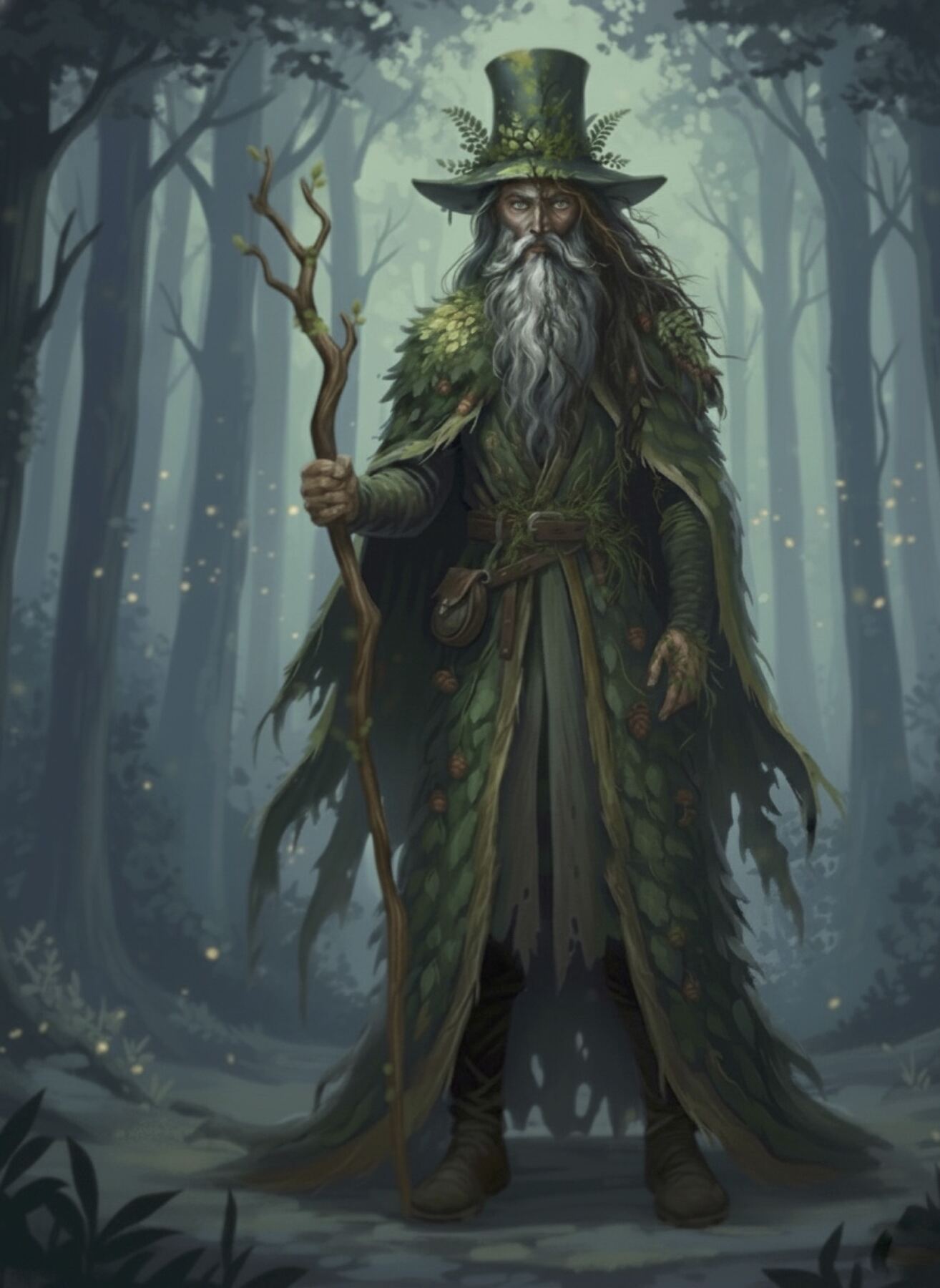
Whenever mist rises above the deep woods of Český les and the wind rustles through the trees, the locals know that the sprite Nikl is walking the land. For centuries this legendary patron and spirit of the local forests watched over glassmakers, woodcutters and travellers alike. To good people with a pure heart he shows the right way; he protected them from foul weather and helped the glassmakers keep the fire alive in their furnaces. But anyone who entered the forest with disrespect or greed was led mercilessly into the deep bogs by Nikl. His legend lives on in the border forests around Železná to this day.
Pověsti od hranice
The beings born in the mossy pools
Untamed forests, seas of stone and wild peat bogs have always fired the human imagination. For generations the old settlements around Železná and Bělá nad Radbuzou passed down tales of wild hunts, of mysterious little lights above the marshes and of enchanted treasures hidden deep inside old castles. These legends are not mere fairy tales – they are the soul of Český les, a soul that gives every stone and every old tree a unique story of its own.
The legend of the White Lady of the baroque bridge in Bělá nad Radbuzou
Whenever a thick evening mist settles over the river Radbuza in Bělá, people tell of a silent figure in white robes walking among the statues of saints on the old stone bridge. According to those who remember, it is the soul of the young daughter of a local master builder, who watched over the precious work while the bridge was being built in the 18th century. This is not a ghost anyone need fear, however – the White Lady of Bělá is a benevolent protectress. She watches over travellers crossing the river into the woods of Český les after dark, and makes sure the wild water never does the bridge any harm.
The legend of the imp Nikl and the glassmaker's lamp
In the days when the glass furnaces roared day and night in the deep forests around Železná and Bělá nad Radbuzou, an imp called Nikl lived in the moss under an old boulder by the Huťský brook. No bigger than a glassmaker's boot, he wore a cap of bracket fungus, a little coat of bark, and carried a small lantern that glowed with a deep blue light.
Nikl was the just guardian of the deep woods. He saw to it that the glassmakers felled no more timber than the furnaces needed, and that the woodcutters honoured the silence of the forest.
One frosty winter night the young helper Jan stopped in at the glass-melting house near Železná. He was exhausted, he had been stoking the furnace for the whole shift and from sheer weariness he dropped off to sleep for a moment. Just then a wild north wind stole into the glassworks, flung the window open and the flame in the furnace began to die away sharply – which for the glassmakers meant certain ruin, since the glass melt would set solid and destroy the furnace beyond repair.
When Jan woke with a start, he caught sight of a small figure by the furnace door. With his little blue lantern Nikl was blowing on the last glowing embers. As soon as the flame had flared up again and the furnace was saved, the sprite turned to Jan, laid a finger to his lips as a sign to keep silent, and pressed a small, crystal-clear pebble of glass into his palm.
To those who worked honestly and with respect for the forest, Nikl brought good fortune and shielded them from misfortune. Yet it was said that the proud and the greedy, who shouted in the woods or felled young trees, he punished without mercy – he would kindle a false little light out in the marshes and lead them so deep into the peat bogs that they searched for the way back until dawn.
HISTORY THROUGH TIME
The raw character of the Český les mountains will captivate you with its pristine nature and wrap you not only in mysterious memories of the vanished villages along the border, but will also call to mind the era of the medieval Zlatá stezka, the Golden Trail. Take a look into the timeline of historically significant events in Český les.
Pravěk
Small historical finds point to the first traces from the late Palaeolithic (10,000 BC); archaeologically the area remains little explored owing to the impenetrability of its forests. The first archaeological surveys of the Český les region grew out of the fashion for collecting.
Among specialists, the find of a bronze cart in one of the burial mounds near Milavče by Domažlice is regarded as a cult discovery. A bronze sword and a large amphora-shaped vessel made of sheet bronze were uncovered there as well. Thanks to the restorers we can see the vessel today in the museum in Mainz. In the collection of the Museum of the Chodsko Region in Domažlice, small cauldrons and little amphorae have survived. In the Museum of Český les in Tachov you can see an axe-hammer and an axe from the late Stone Age.
Středověk
A period in which settlement grew, above all in the Domažlice area, though the inhospitable climate meant that it never took lasting hold; the colonisation process also ran up against friction between two ethnic groups, the Czech and the Bavarian side. Fortified guard posts sprang up along the paths on both sides, the Czech and the German, yet the provincial border remained unsettled and shifting. Clashes of interest kept arising between the Czech princes and their neighbours from Bavaria and the Upper Palatinate. One major military encounter was the battle fought by Prince Břetislav I against the German Emperor Henry III at Brůdek in 1040, in which the Czech armies were victorious.
Monastic colonisation was also under way, bringing the first west Bohemian monastery, the Benedictine house at Kladruby, into being in 1115, and the Premonstratensian monastery at Teplá in 1193. The transformation of the village settlements, which lay in the hands of the new feudal owners, gathered pace and smaller market towns began to take shape. Cosmas's chronicle already mentions one of them – Bělá nad Radbuzou, which was once one of the centres of the Chods.
Chodové
The guardians of the land border in the Český les area held the belt stretching from the Všerubský průsmyk pass all the way to the Tachov region. The first mention of the Chods is found in Dalimil's Chronicle from the beginning of the 14th century. Historians regard them as inhabitants of Serbian origin, which is also suggested by the oldest Chod settlement in the Chod territory near Srbice. The Chods had their own privileges, their own court and their own reeve. These, however, gradually died out as fortified castles and towns arose and German settlers colonised the area. Under the reign of Přemysl II. Otakar the royal towns of Domažlice and Tachov were founded. Castles were built on a grand scale – Hrad Přimda, the castle bastion in Tachov, Nový and Starý Herštejn or Hrad Rýzmberk.
The rivalry for the imperial crown between Charles IV and Louis IV of Bavaria aroused a heightened military interest on the part of the Luxembourgs in western Bohemia and in its defence against the neighbours. Charles IV never fully managed to carry through his plan for a „New Bohemia” formed by joining Tachov, the surrounding villages and the dowry of his wife Anna of the Palatinate (the Upper Palatinate). Through his frequent journeys across this country from Prague to Nuremberg he laid the foundation of the „Nuremberg Trail“.
Husitství
The fourth crusade, organised by the Imperial Diet and the Pope, was to advance from Nuremberg by way of Cheb and Tachov, but in the end the crusaders decided to take Stříbro instead. The Hussite armies under Prokop Holý reacted quickly, however, and drove the crusaders away from the gates of Stříbro. Unwilling to accept their defeat, the crusaders returned in the shape of a fifth campaign and on 1 August 1431 laid siege to Tachov, laying waste to the wider surroundings and burning down the small town of Brod, another 200 villages and even part of the Domažlice suburb. This campaign, too, the Hussites repelled on 14 August.
The Hussite wars brought great shifts in land ownership: the archbishopric estates of Horšovský Týn and Velký Bor disappeared, and the Kladruby monastery was curtailed as well. Though the wars helped make the borderland towns more Czech, the nobility began inviting new German colonists.
A change in ownership
The sale of the estates to the German nobility brought the Habsburgs to power. Economic enterprise began to flourish, drawing heavily on the wealth of the forests and on timber extraction; the wood served not only as fuel but also for the needs of the glassworks and the ironworks. We call this period the glassmaking expansion. Among the works, we might mention the oldest of them, Stará Huť u Rybníka, and the Eisendorfská huť, the Štraská, the Horní and the Karlova Huť. The burning of charcoal in charcoal stacks also provided the reducing agent used in the smelting of iron and zinc ores.
Driven by the post-war demand for iron, the ironworking industry flourished, with ironworks springing up above all in the areas of Horšovský Týn and Trhanov. The forests provided a living for craftsmen, especially woodcutters, joiners and wheelwrights. Building stone was quarried here as well. And not least, we must not forget water management, which brought with it the founding of fish ponds. The water power of the forest streams drove polishing works, glass-grinding shops, hammer mills and corn mills.
This economic boom in the field of enterprise made the local businessmen wealthy, which did not escape the notice of the German side and led to an invasion by Bavarian troops. The reforms of enlightened absolutism were carried out and monasteries were dissolved. The national struggle between Czechs and Germans continued into the 19th century as well.
From the founding of the republic to the Munich Agreement
Then came the world economic crisis, and the worst affected places were precisely the settled non-German peripheral territories of the Czech lands. The negative impact on the export of craft products was considerable, and it fuelled strong anti-Czech feeling among the neighbouring population and the rise of the Sudeten German Patriotic Front. The borders had to be guarded and forces mobilised in defence of the threatened republic. The west Bohemian borderland was the scene of the greatest resistance by fanaticised Henlein supporters against the republic after Hitler's speech in Nuremberg. Only the declaration of martial law and the ban on the activities of the Sudeten German party brought the situation under control.
Železná opona
The erection of the “Iron Curtain” after February 1948 also played its part in shaping Český les. From that moment on, no one but the border guards was allowed into the strictly guarded frontier zone. Brute force, electric fences and minefields – all of this stood as the symbol of Český les until 1989, when the Iron Curtain finally fell. The displaced villages were wiped off the face of the earth for good. Forty years of Communist Party rule left a deeply negative mark on the development of the Český les region and caused enormous cultural and social damage.
Současnost
Immediately after the border zone was abolished in 1989, when this long-secret area became accessible to the general public, the first proposal to prepare a Protected Landscape was drawn up in 1990. Thanks to the long-lasting ban on access, a unique natural landscape has been preserved for us, with a very low population density, almost as it was in the Middle Ages. From the hills of dense forest you will barely glimpse the lights of human dwellings. The sparse settlement also has a great deal to do with the greater travelling distance to the towns, the high unemployment and the lack of schools offering higher education.
Are you ready
to pay us a visit?