



Deep in the forests between Bělá nad Radbuzou and Přimda lie places that once teemed with life and today keep silent. Explore the stories of vanished villages, sacred buildings and landmarks that recall the Sudetenland and the dramatic history of the region.
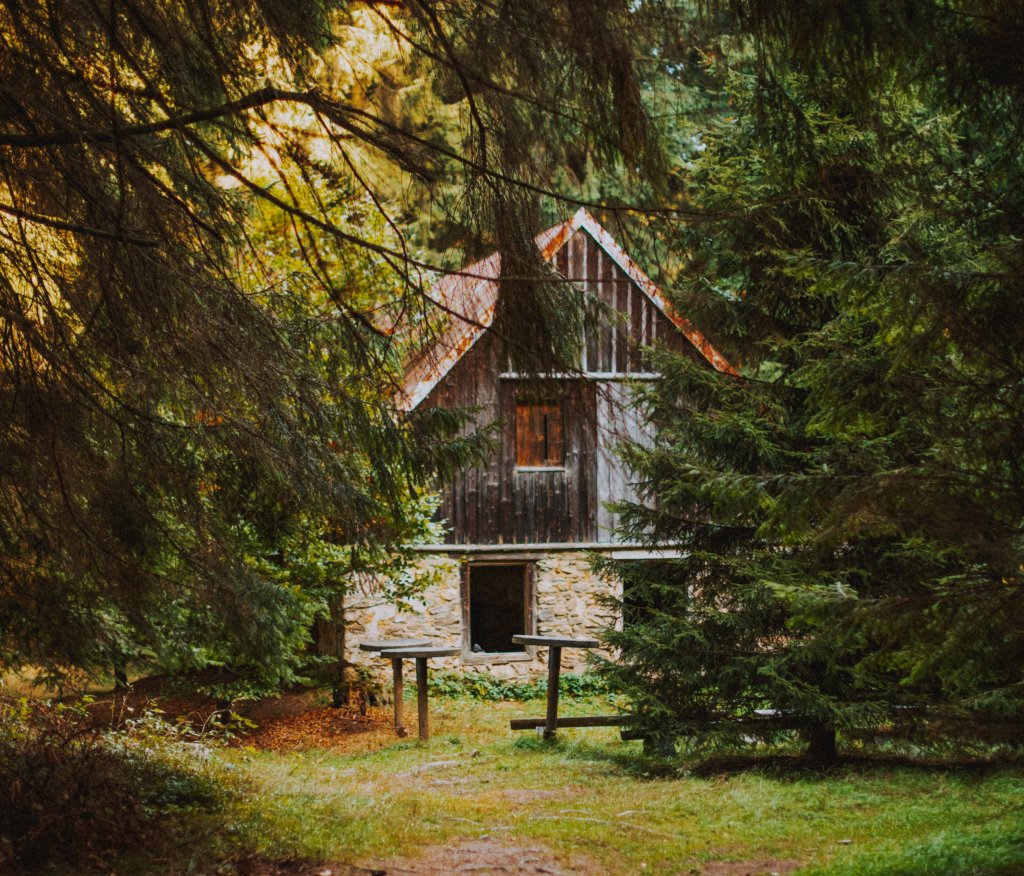
A region that vanished from the maps but remained in the landscape
Český les is one of the least populated and most magical mountain ranges in the Czech Republic. It has kept a silence you will not find anywhere else. That silence, however, is not empty; it is full of stories. Only a hundred years ago thousands of people lived here. They had their houses, churches, schools and pubs. Then came the war, the post-war expulsion of the German population and the declaration of the border zone.
The villages disappeared, the people left, the churches were torn down. For decades the region became forbidden territory. And that is precisely why it feels so strangely calm today… as if time had frozen at the moment when nothing but emptiness was left here.
Today people are coming back to Český les. No longer as settlers, though: they come to admire it. Because Český les has something that is growing scarce elsewhere, a genius loci that has resisted oblivion.
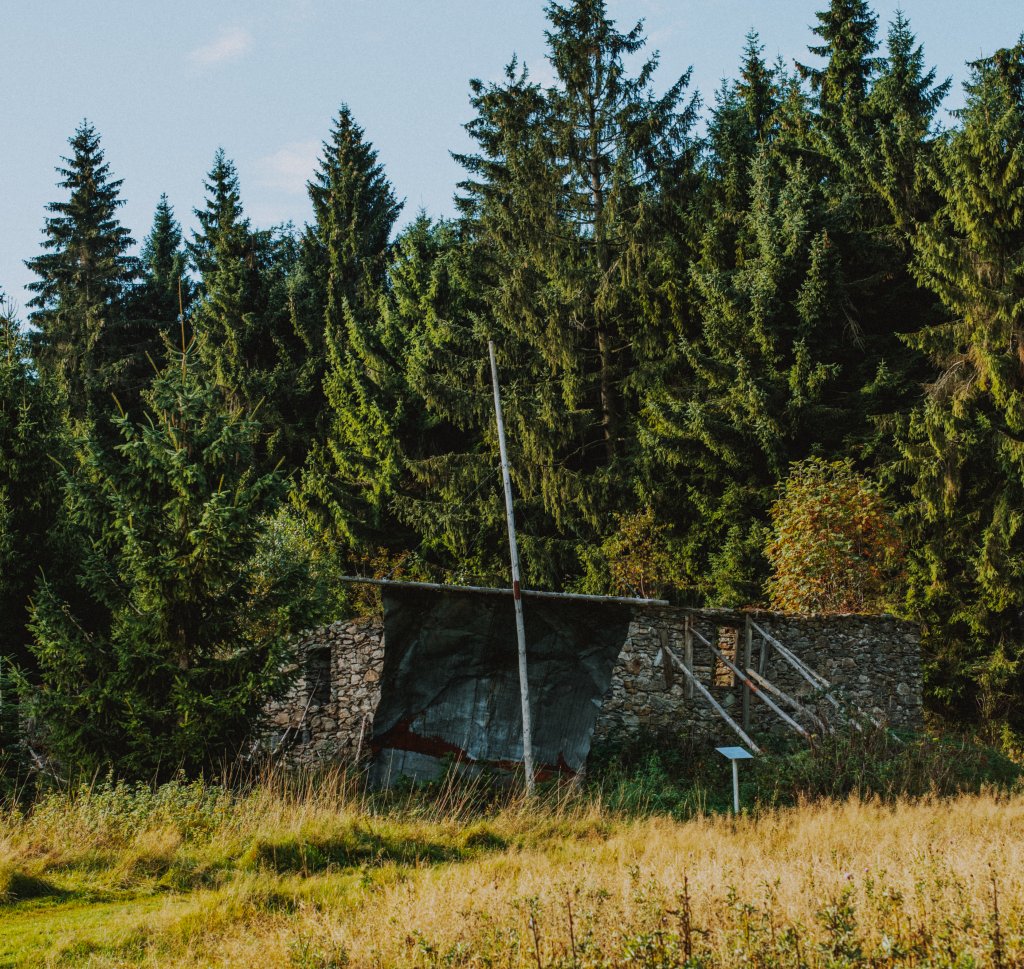
Pleš – the village swallowed by the forest
Pleš was once one of the largest villages in the area. It had more than 80 houses, a school, a pub and the church of St George. Today all that is left of the village are the remains of foundations, orchards that still bear fruit, and the melancholy atmosphere of a lost home. The landscape here is still shaped by the fruit trees that locals planted more than a century ago. It is a strange feeling to sit under an old apple tree in the middle of the forest and imagine that a house once stood here.
Pleš is the perfect trip for anyone looking for quiet, space and a touch of nostalgia.
Vranov – the village that disappeared after the Second World War
Vranov is among the best known abandoned villages in Český les. In 1930 more than 700 people lived here - there was a school, an inn, the church of St Roch and a gendarmerie station. In 1952 the village was completely evacuated, absorbed into the restricted border zone and later demolished.
Today you will find the stone walls of old farmsteads, the remains of the cemetery, sections of the roads that once led to Germany, and old avenues that keep growing in defiance of time.
If you enjoy photography, for example, this is somewhere you should definitely visit. With its atmospheric decay, Vranov is one of the most striking places for photographers, a quiet memorial to the Sudetenland.
Waldorf – a silence that tells more than words
Waldorf was a small settlement in the dense forests. After the expulsion it was razed completely, and today you will find only the remains of foundations and stone field boundaries.
It is, however, a place of incredibly powerful calm – ideal for meditating in the forest or for a slow walk. Some say that here “the forest speaks”. Others that there is “a sense of a different time”.
In any case, if you want to experience the authentic atmosphere of the vanished Sudetenland, Waldorf will move you with its simple but profound energy.
Železná Huť – the ironworkers' home that gave way to the border zone
Železná Huť was originally a settlement of ironworkers and glassmakers. In the 19th century small ironworks operated here, along with a glassworks that produced the typical green bottles.
After its inhabitants were displaced, the village gradually disappeared. Today you will find old cellars, the remains of furnaces, worked stones and the terraces left behind by the houses.
Beautiful forest tracks lead from Železná Huť towards Bystřice and Plešné.
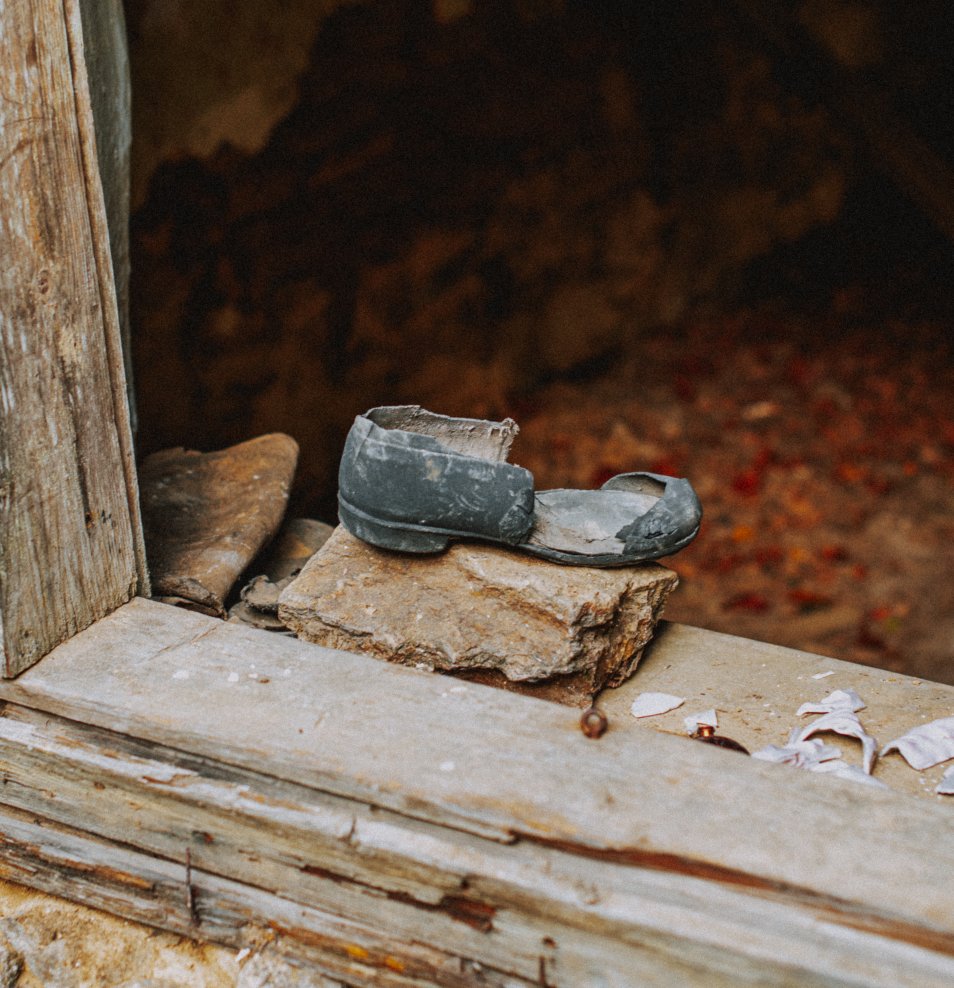
The dramatic story of the Sudetenland
The fates of these villages were bound together by several key events:
1. The expulsion of the German population (1945–46)
Most of the villages in Český les were predominantly German. After the war their inhabitants often had to leave in a hurry, with no chance of ever returning.
2. The declaration of the border zone (1948)
The entire territory was sealed off. People were not allowed back and the houses were left to their fate.
3. Clearance and demolition (1950s to 1980s)
The army systematically pulled down houses and churches to prevent anyone from returning. Only foundations, ruins, avenues and orchards were left.
And so one world disappeared, but not for ever. Today life is returning to the landscape. Not in the shape of villages, but in the shape of people who are discovering its stories.
Routes straight from Železná – ideal for guests of Resort Český les
Železná → Vranov (approx. 9 km)
A beautiful route through the forest that ends at the ruins of what was once a large village. Ideal for a meditative afternoon walk.
Železná → Pleš → the Ebene lookout tower (approx. 11 km)
The magic of a vanished village combined with a view across the whole Sudetenland. The autumn mists here are unforgettable.
Železná → Waldorf (approx. 6 km)
A quiet route for those who are not looking for crowds, but for space.
Železná → Železná Huť → Bystřice (approx. 8 km)
The historic route of the ironworkers and glassmakers, today one of the most authentic trails in the region.
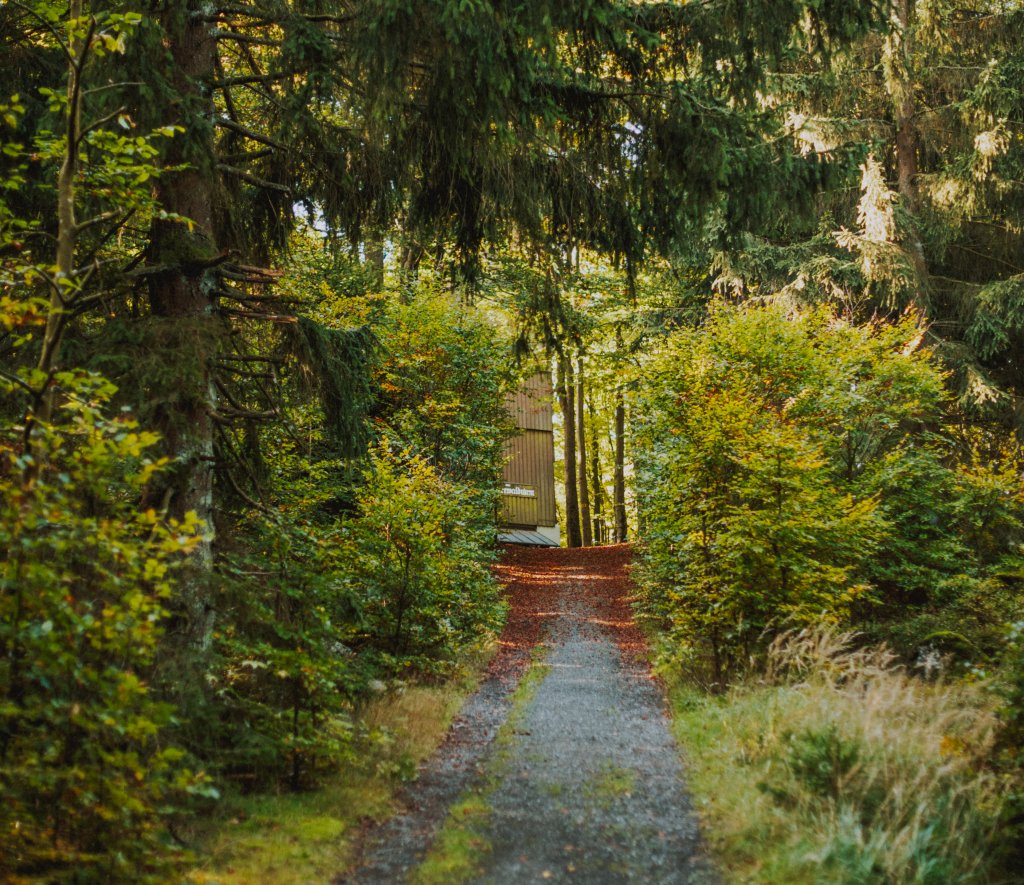
SOMETHING EXTRA: how to read the “vanished villages” in the landscape
The sites of former villages can be recognised by several signs:
Fruit trees in the forest
Apple, pear and plum trees – proof of gardens that once stood here.
Level terraces
The remains of house foundations or gardens.
Old avenues
They led away from the village green or to the pub.
Stones and masonry
The foundations of farmhouses, barns and cellars.
Wayside crosses and shrines
Often the only original feature to have survived the demolitions.
Tip: an old map of the Sudetenland (from 1836–1852, for instance) can show you what stood where, so you can then picture it right there in the landscape.
The lost villages of Český les are memorials to a world that has disappeared. They are not merely historical sites. They are places where nature, the past and silence meet. Places that teach us to see the landscape differently - more attentively, more humbly, more slowly.